The 126th U.S. Amateur Championship takes place at Merion Golf Club in Ardmore, Pennsylvania from August 10 to 16, 2026. Stroke play is co-hosted at Philadelphia Country Club in nearby Gladwyne. For a championship that has been played since 1895 and has crowned champions including Bobby Jones, Jack Nicklaus, Arnold Palmer, and Tiger Woods, returning to Merion carries a weight that few venues can match.
This will mark a record 20th time that Merion stages a USGA Championship, and the club's seventh U.S. Amateur, also a record. No club in American golf has hosted more USGA championships than Merion. That distinction is not accidental. It reflects something about the course, the club, and the specific relationship between this piece of ground in suburban Philadelphia and the history of the game.
This guide covers everything worth knowing before the championship begins: the course and why it matters, the format and how 312 players get there, the defending champion, the historical weight of 2026 in particular, and what to watch when competition begins on August 10.
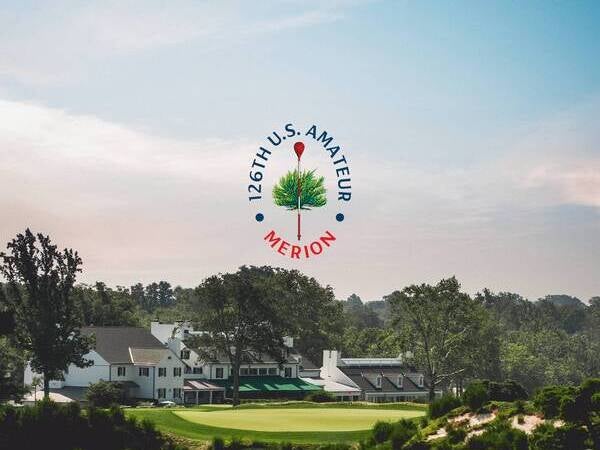
Merion Golf Club: The Course That Holds Golf's Most Concentrated History
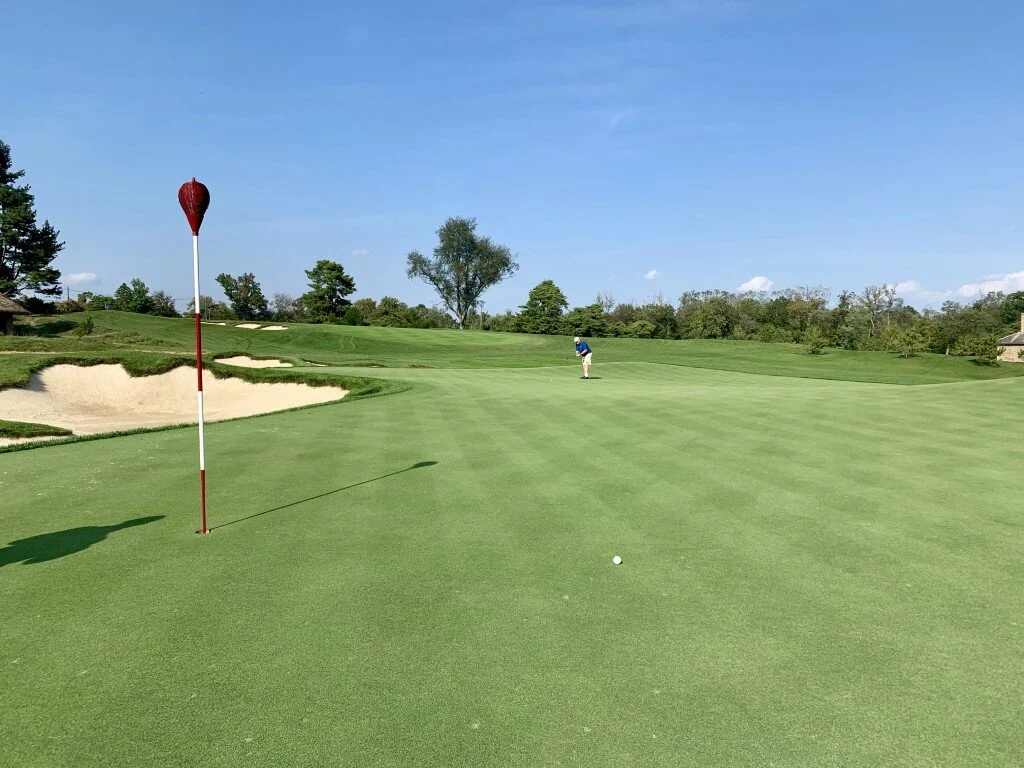
Merion Golf Club's East Course is short by modern standards, a par 70 of under 7,000 yards, but its firm greens, deep bunkering with the famed white faces of Merion, and signature wicker-basket flagsticks make it one of the most demanding tests in the country.
Merion East has long been considered the best course on the tightest acreage in America. The specific compression that makes Merion unusual is worth understanding: a golf course that fits within a footprint that would comfortably be called "small" by modern design standards, yet has hosted five U.S. Opens, seven U.S. Amateurs, and events featuring every significant name in the sport's history across more than a century of championship play.
When Merion hosted the U.S. Open in 2013, the present generation of big hitters could not conquer this clever little course. They could not consistently hit its twisting fairways, which are edged by creeks, rough, and out-of-bounds stakes. Additionally, players could not consistently hold its canted greens, edged by bunkers that stare back. Justin Rose won with a 72-hole total of one-over-par.
The bunker count alone tells you something. The over 130 bunkers are strategically placed and cause the player to think. At a course this length, the conventional amateur strategy of grip-it-and-find-it-from-wherever does not work. Merion demands placement golf from the first tee, and it punishes the amateur instinct to overpower a layout that simply cannot be powered through. That quality is precisely what makes it an ideal U.S. Amateur venue: it tests what the best amateur golfers in the world can do with their brains, not just their bodies.
The course was opened in 1912, designed by Hugh Wilson, and carries a slope rating of 142 and a course rating of 73.6. Merion is excited to welcome the U.S. Amateur back to the East Course, where it was last hosted in 2005.
The History Underneath This Championship
The U.S. Amateur Championship has a specific kind of history that the professional tour cannot replicate, because amateur golf connects to the game's origins in a way that predates the professional circuit entirely.
The U.S. Amateur is the oldest USGA championship, established in 1895. That makes 2026 the 126th edition of a championship that has been played continuously, with the exception of the war years, for over a century. The list of players who won this title before turning professional is a catalogue of the sport's defining figures across every era.
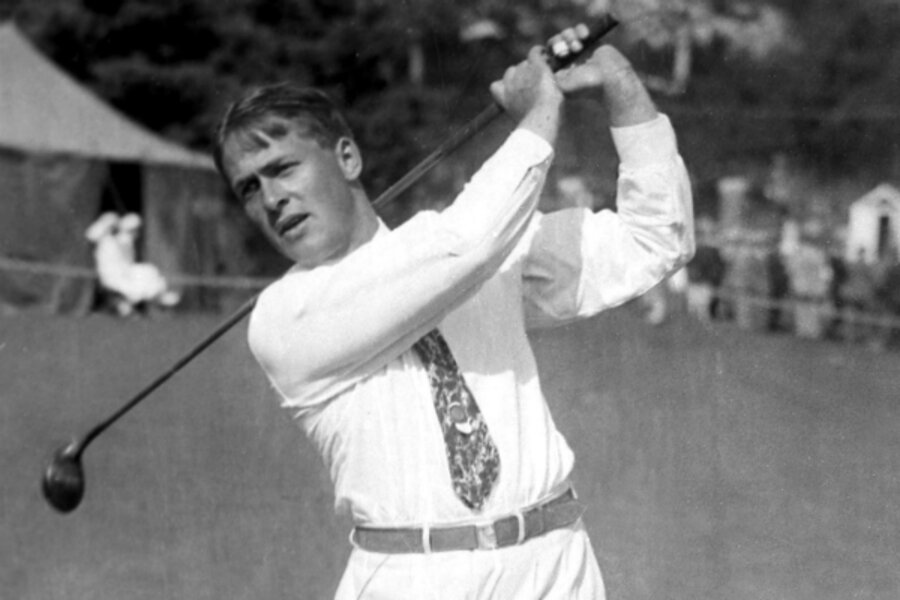
In 1930, on the 11th hole of Merion's East Course, Bobby Jones completed his Grand Slam by winning the U.S. Amateur. Jones's Grand Slam in 1930 remains one of the most discussed achievements in golf history. He won the U.S. Open, the British Open, the U.S. Amateur, and the British Amateur in a single calendar year. No player has come close to matching it since. The specific hole where Jones secured that achievement, the 11th at Merion, carries a plaque marking the moment. The 2026 field will walk past it every round.
Merion has hosted the U.S. Amateur in 1916, 1924, 1930, 1966, 1989, 2005, and 2026. Each edition has added something to the course's championship biography. The 2026 edition arrives with the added context of Philadelphia's 250th anniversary of the Declaration of Independence, which gives the week a civic dimension alongside its sporting one.
Merion President Brad Bradbeer told the Inquirer that the suburban Philadelphia club was excited to host the Amateur again, particularly in the year when the 250th anniversary of the signing of the Declaration of Independence will be celebrated. He called it an important year for the city of Philadelphia.
The Format: How 312 Players Compete at Merion
The U.S. Amateur Championship format is unlike any professional tour event, and understanding it is essential to following the competition properly across all seven days.
The 2026 field opens with 36 holes of stroke play, shared with Philadelphia Country Club in Gladwyne, before the low 64 advance to single-elimination match play and a 36-hole final.
The stroke play opening rounds on Monday and Tuesday determine which 64 players earn the right to compete in match play. Those 64 players then enter a bracket-style knockout competition where each match is played over 18 holes, except for the final on Saturday and Sunday which is played over 36 holes. Match play changes the nature of the game entirely: you are not managing a scorecard, you are managing holes against a specific opponent. A player who makes a triple bogey on hole three of a stroke play round loses three shots on the field. A player who makes a triple bogey on hole three of a match play round simply loses that one hole.
The 36-hole final is the most distinctive element of U.S. Amateur week. Professional golf has not used 36-hole finals for decades. The U.S. Amateur has maintained the format specifically because of what it tests: the ability to sustain concentration, manage a mental and physical day, and execute under pressure across a format that eliminates the momentum resets that come with overnight breaks between rounds.
The U.S. Amateur has no age restriction and is open to players with a Handicap Index of 0.4 or lower. That single eligibility requirement is the defining characteristic of the championship's democratic accessibility: any golfer in the world with a low enough handicap can enter the qualifying process and attempt to earn their place at Merion.
The Qualifying Path: Two Stages, One Destination
Since 2024 the USGA has used a two-stage format: Local Qualifying across June and Final Qualifying in July, each a single 18-hole stroke-play test. Survive both and you earn one of the 312 spots in the championship field at Merion Golf Club in Ardmore, Pennsylvania, August 10-16, 2026.
The path to Merion unfolds in two stages. First comes Local Qualifying, a one-day 18-hole test held at courses throughout North America in June. Players who survive that stage advance to Final Qualifying in July, where another 18-hole round determines who claims the final spots in the championship proper.
The field of 312 that arrives at Merion is therefore not a preselected group of invited players. It is a group of golfers who have earned their way through two rounds of qualifying competition, alongside exempt players who have earned entry through results in other USGA events, major championship performance, or world amateur ranking. The combination produces a field where elite college players, accomplished mid-amateurs, promising juniors, and career amateurs all compete on the same ground under the same rules.
By the time players reach Final Qualifying, the fields are typically loaded with elite college talent, accomplished mid-amateurs, and some of the best players to emerge from local qualifying. The two-stage qualifying format is not just an administrative mechanism. It is part of what makes the U.S. Amateur a genuine national championship rather than an invitational event in competitive clothing.
The Defending Champion: Mason Howell
The current champion is Mason Howell, who won the 2025 U.S. Amateur at The Olympic Club in San Francisco, California.
Georgian Mason Howell, 18, became the third-youngest U.S. Amateur champion in August. Winning the U.S. Amateur at 18 places a player in a category defined by a short list of historically significant names. The youngest U.S. Amateur champions in history went on to professional careers that defined their respective eras.
Howell arrives at Merion as the defending champion with exemption into the 2026 field, and the narrative weight of defending a title at a venue as storied as Merion's East Course adds dimension to his presence in the bracket. Amateur golf does not always produce back-to-back champions at the U.S. Amateur. The format's match play component introduces enough variance that defending is genuinely difficult regardless of how well the champion is playing.
What the defending champion does bring to a U.S. Amateur field is a specific kind of credibility: the knowledge, demonstrated in competition, that they can close. The 36-hole final is the moment that separates strong match play performers from genuine U.S. Amateur champions, and Howell has been there and won it.
Why Merion in 2026 Is a Specific Kind of Event
Several things converge in 2026 that give this U.S. Amateur a weight beyond its normal significance as the most prestigious title in amateur golf.
The 20th USGA championship at a single venue is an achievement no other club in American golf has reached. The 2026 edition will be the 20th USGA championship at Merion, and the club's seventh U.S. Amateur, both records. The combination of those two records at a course that carries the layered history described above makes the 2026 championship something more than another edition of an annual event.
The 250th anniversary of American independence gives Philadelphia's entire summer of 2026 a celebratory context that the U.S. Amateur fits naturally within. A championship at a club less than ten miles from Philadelphia's historic center, during the week that precedes the anniversary celebrations, carries a civic and national dimension that the typical August championship schedule does not.
And Merion's East Course itself, following Gil Hanse's extensive renovation completed after the 2013 U.S. Open, plays in its most refined form since the original Hugh Wilson design. With Hanse's extensive two-year renovation after the 2013 tournament, the design should be even more polished and pristine when the U.S. Amateur returns in 2026.
The 312-player field that arrives at Merion on August 10 will be competing on a course that Bobby Jones sealed his Grand Slam on in 1930, that Ben Hogan hit his most famous shot on in 1950, and that Justin Rose won the U.S. Open on in 2013. The history is not background to the competition. At Merion, it is part of the playing surface.
What to Watch at the 2026 U.S. Amateur Championship
Understanding what to look for makes following the U.S. Amateur a genuinely richer experience than tracking a leaderboard number alone.
Watch the stroke play rounds at both venues for the names near the bubble. The difference between finishing 63rd and 65th after 36 holes separates the players who advance to match play from those who make the drive back to wherever they came from. Players who survive the cut by one or two shots often enter match play with a psychological intensity that the comfortable qualifiers do not always match immediately.
Watch the early match play rounds for upsets. Match play's inherent variance means that the top qualifier from stroke play does not necessarily advance deep into the bracket, and the players who learn Merion's quirks fastest in the opening rounds tend to carry that course knowledge advantage deeper into the week.
Watch the back nine on the final day of the 36-hole final. At Merion specifically, where the closing stretch demands precise iron play and green reading under accumulated pressure, the final outcome of U.S. Amateur week is most often determined in the final six holes rather than the first thirty.
The 126th U.S. Amateur Championship has the course, the format, the history, and the field to be one of the best weeks in amateur golf in recent memory. Merion has been earning that kind of week for over a century.

.jpg)
.jpg)


.png)
.png)